
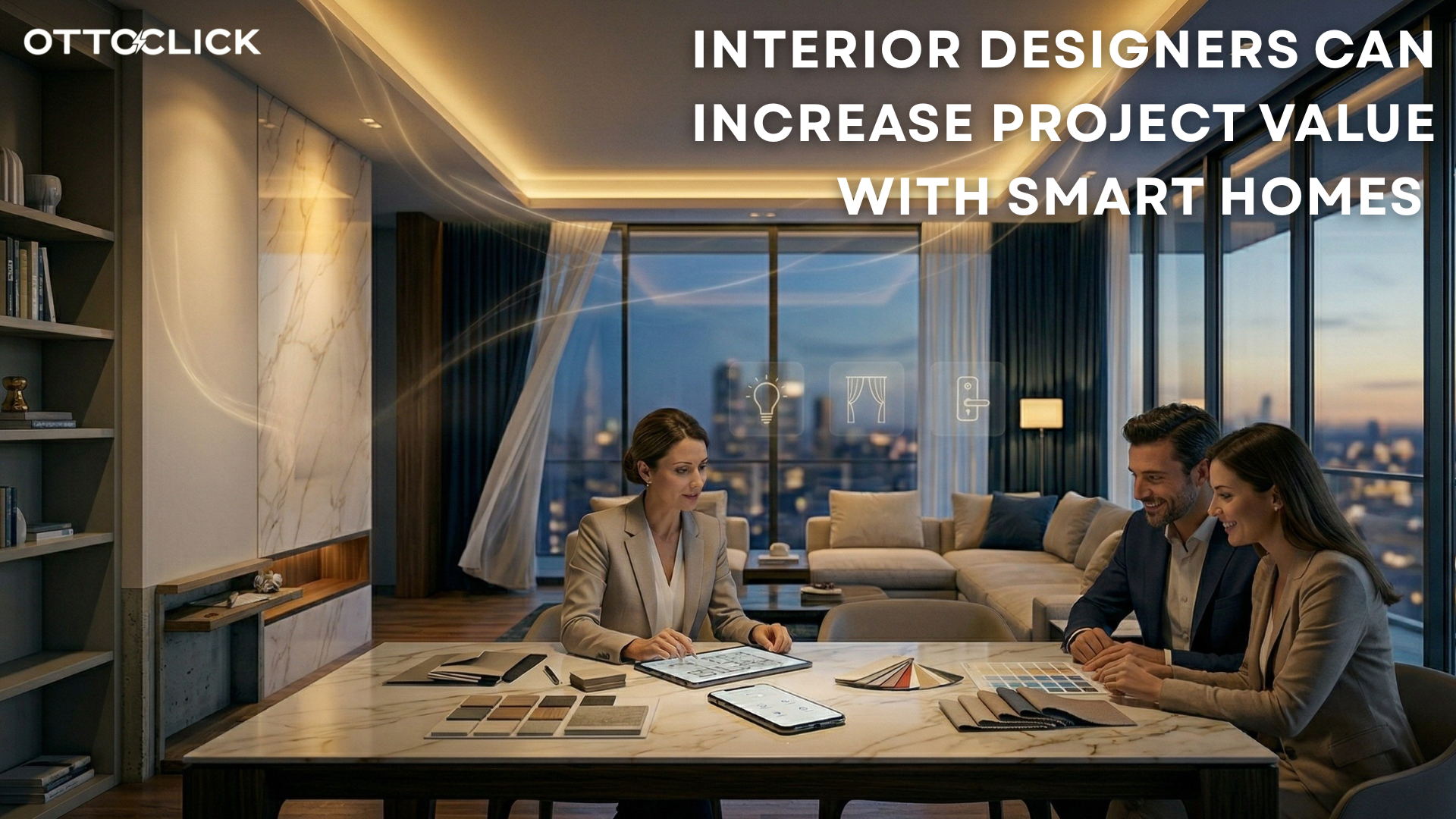
Interior design today is no longer limited to aesthetics, layouts, and material selection.
Clients are evolving. Expectations are rising. And the definition of a “premium home” is changing.
In 2026, interior designers who go beyond design and offer integrated smart home solutions are not just delivering better projects — they are significantly increasing their project value and profitability.
The Changing Expectations of Modern Clients
Today’s clients are more informed and more exposed to global living standards.
They are not just looking for:
- Beautiful spaces
- Branded materials
- Modern furniture
They are looking for:
- Convenience
- Control
- Smart living experiences
A well-designed home that lacks automation now feels incomplete, especially in the premium segment.
Why Interior Designers Are in the Best Position to Upsell Automation
Interior designers play a crucial role in shaping the entire home experience.
You are involved in:
- Space planning
- Electrical layout decisions
- Client consultations
- Material and finish selections
This gives you a natural advantage to introduce smart home automation at the right stage of the project.
When positioned correctly, automation does not feel like an add-on. It feels like a natural extension of the design.
How Smart Automation Increases Project Value
Higher Overall Billing
Smart home integration increases the total project cost without significantly increasing design complexity.
Even a basic automation setup can add a substantial value to the final billing.
Premium Positioning
Projects with automation are perceived as high-end and future-ready.
This allows designers to position themselves in a more premium category, attracting better clients.
Differentiation in a Competitive Market
Interior design is becoming increasingly competitive.
Offering automation gives you a clear edge over designers who are still limited to traditional services.
Key Automation Features Designers Can Offer
Interior designers do not need to handle technical complexities. The focus should be on identifying the right features for clients.
Lighting Automation
Custom lighting scenes that enhance mood and ambience.
Touch Panel Integration
Minimal and premium control interfaces that complement modern interiors.
Curtain Automation
Seamless control of natural light and privacy.
Smart Locks
Advanced entry systems that align with modern security expectations.
App and Voice Control
Centralized control that enhances convenience and user experience.
When to Introduce Automation in a Project
Timing plays a critical role in successful integration.
The best stage to introduce automation is during:
- Initial client discussions
- Electrical planning phase
- Concept presentation
Introducing it early ensures:
- Better design integration
- Smooth execution
- Higher acceptance from clients
Late-stage introduction often leads to resistance due to budget constraints or planning limitations.
Overcoming Client Objections
Many clients may initially hesitate due to cost concerns or lack of awareness.
Here is how to address common objections:
“Is it necessary?”
Position automation as a lifestyle upgrade, not a technical feature.
“Is it expensive?”
Explain scalable options. Clients can start with essential areas and expand later.
“Is it complicated to use?”
Highlight ease of use through touch panels, mobile apps, and voice control.
Collaboration Model with Automation Partners
Interior designers do not need to develop in-house automation expertise.
Collaborating with the right automation partner ensures:
- Technical support
- Smooth installation
- Reliable after-sales service
This allows designers to focus on design while still offering a complete solution.
Business Benefits for Interior Designers
Increased Revenue per Project
Automation adds a new revenue stream without requiring additional marketing efforts.
Better Client Retention
Clients who receive a complete, modern solution are more satisfied and more likely to refer others.
Stronger Brand Positioning
Designers offering smart home integration are perceived as forward-thinking and innovative.
The Future of Interior Design
Interior design is moving towards a more integrated approach.
The combination of aesthetics and technology is becoming the new standard.
Designers who adapt early will lead the market. Those who delay may struggle to keep up with evolving client expectations.
Conclusion
Smart home automation is not just an additional feature. It is a strategic opportunity for interior designers to increase project value, improve client experience, and strengthen their market position.
By integrating automation into design, you move from being a service provider to a complete solution partner.
Partner for Smart Home Integration
If you are an interior designer looking to enhance your projects with smart automation, collaborating with the right partner is essential.
Ottoclick provides end-to-end smart home solutions, supporting designers with planning, execution, and seamless integration.
The focus is on helping you deliver smarter homes while increasing your project value and client satisfaction.
